

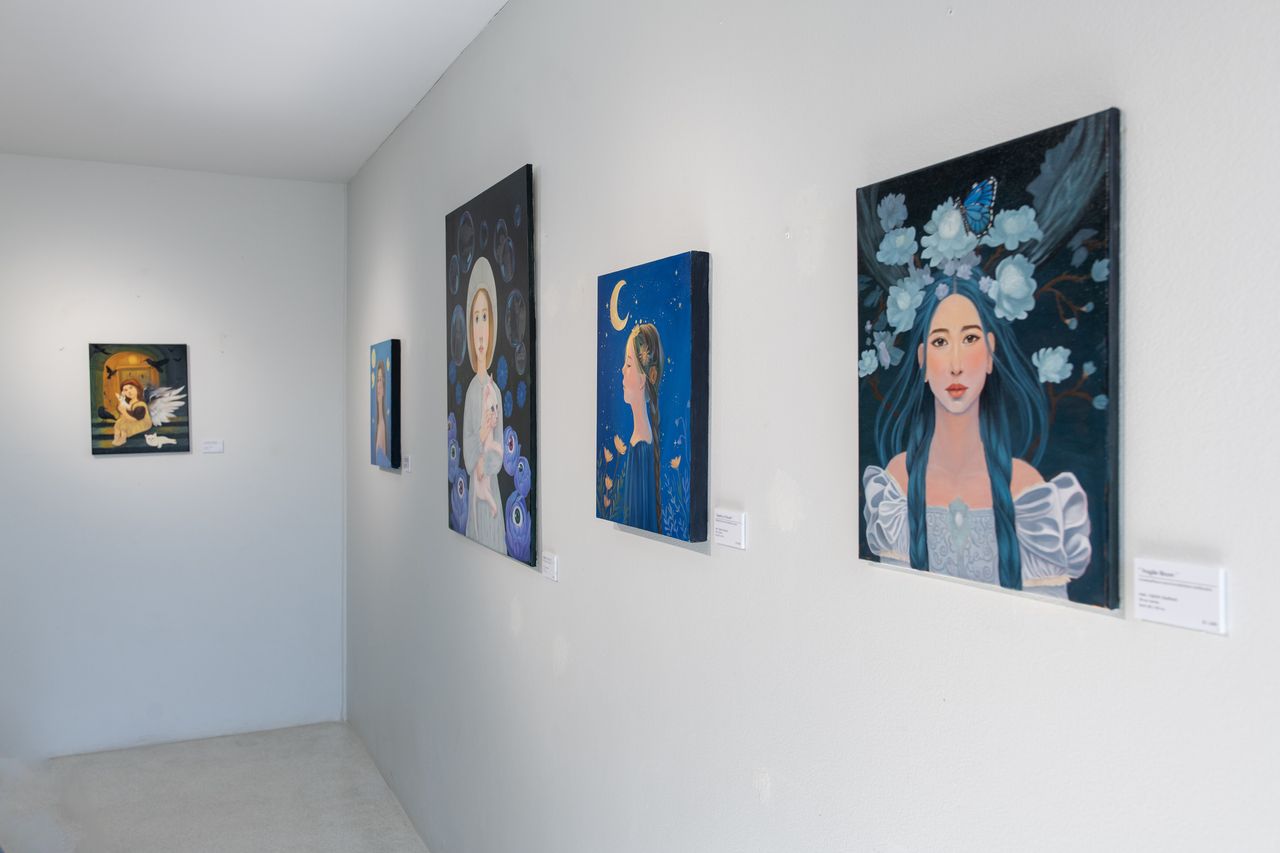
“Art is not a luxury,” Maya Angelou, the renowned author and poet, once said. But when it comes to buying artwork to enjoy in the comfort of your home, it can feel like one. Owning fine art may seem out of reach, limited to auction houses and high-end galleries. Online marketplaces, however, have made it easier and more affordable than ever to buy paintings, sculptures, photography and more without leaving your sofa.
A primary avenue to buy art online is through galleries such as TheArtling.com, Zatista.com, Artfinder.com and Artsy.net. These sites sell pieces to meet a variety of tastes, with price tags that fit even modest budgets. You can typically filter your search by style and medium as well as by price to narrow down the thousands of pieces available for purchase.
Among drawings recently selling for $500 or less on Zatista, for example, was a luminous pastel seascape titled “Morning Light,” by Florida-based artist Roxene Sloate, for $325.
From just $107.88 $24.99 for Kiplinger Personal Finance
Become a smarter, better informed investor. Subscribe from just $107.88 $24.99, plus get up to 4 Special Issues
CLICK FOR FREE ISSUE
Sign up for Kiplinger’s Free Newsletters
Profit and prosper with the best of expert advice on investing, taxes, retirement, personal finance and more – straight to your e-mail.
Profit and prosper with the best of expert advice – straight to your e-mail.
Meanwhile, Artfinder listed an abstract photograph titled “On The Merry Go Round VIIa,” by U.K.–based photographer Adam Regan, for $535.
Moving higher on the price scale, Artsy recently listed an abstract acrylic painting on cut pieces of hand-silkscreened canvas titled “Travels,” by Natalia Nicole Rodríguez of Puerto Rico, for $1,730.
And you could find the hand-embroidered textile “Entre Dos Mundos,” by Spain-based artist María Sánchez Agustino, for $2,490 on The Artling.
While online platforms can’t replicate the experience of seeing art in person, they offer features that help buyers get a good idea of what it looks like, posting high-resolution photographs of pieces for sale and listing in-depth details on the work, as well as artist bios. Some sites even provide tools that let you preview how a piece might look in your space.
At The Artling, for example, you can upload a photograph of your room, enter the width and height of your wall, then drag an image of the art where you’d like to see it. Online galleries also employ some of the same processes to choose and authenticate artwork that brick-and-mortar ones do.
Artsy and Zatista have curatorial review boards that select the artists and pieces on their platforms, adding credibility and ensuring that the works meet certain artistic and professional standards so buyers can trust that they’re getting legitimate, high-quality art. And all the sites will give you details such as a piece’s materials, its dimensions, whether it is framed or signed by the artist, and, if previously owned, its provenance (ownership history).
Often, the sites provide certificates of authenticity to legitimize the piece’s value. Such certificates may assert its status as an original work by a given artist or a limited-edition print, for example.
The art of returns
When you unbox art that you haven’t seen in person, the color, size or other features may differ from what you expected. So it’s especially important to make sure you know the return policy before you purchase artwork online. As soon as a piece arrives, you should inspect it, retain the original packaging, and photograph any damage or discrepancies with the online description.
Zatista offers one of the most straightforward return policies, allowing buyers 14 days from the time they receive a piece to decide whether they wish to return it for any reason. Zatista even covers return shipping costs of up to $100. Works must be returned in perfect condition, and the buyer must initiate the return within the two-week window.
Artfinder also has a buyer-friendly policy, offering a 14-day money-back guarantee if you’d like to return a purchase for any reason, along with free return shipping. Buyers must request a return within 14 days of receiving the piece and send it back within 14 days of making the request, keeping the artwork in its original condition. International orders may still face customs or logistical hurdles, but Artfinder’s team helps coordinate pickup and your refund.
With Artsy, purchases are protected by a money-back guarantee if an item does not arrive, shows up damaged, or differs from its description. Artsy grants up to seven days to return an item for these reasons. And if you discover a work that you received is inauthentic, you can report it for a full refund up to 180 days after delivery. But if you want to return a piece because you don’t like it after you see it in person, whether you can return it without penalty will vary from listing to listing.
The Artling, based in Singapore and known for shipping artwork internationally, says that all sales are final. But it will accept returns for damaged or defective items, and its team reviews return requests for other reasons on a case-by-case basis.
If you’re not confident that you’ll be happy with a purchase — or if the thought of navigating a return makes online shopping seem like a hassle better avoided — see whether you can visit an online gallery that also has a showroom you can visit in person.
Some of the listings that you find on the major art websites will mention a brick-and-mortar gallery where the piece is currently being shown, for example. Or you can visit a gallery’s website to browse its offerings ahead of an in-person viewing.
For example, at the Tappan Collective (tappancollective.com), based in Los Angeles, you can buy art both online and in person. Similarly, Upsilon Gallery in New York City offers both in-person and online sales (shop.upsilongallery.com).
Check whether the galleries in your area have a website where you can explore the art before making a real-life visit, which lets you experience the work as you might when it’s in your home.
Alternative sites to shop
If you want to cast a wider net, you can look to online sources that go beyond major art-gallery websites. These alternatives may not offer all the same bells and whistles, but they still could be a treasure trove for prospective collectors.
At Etsy.com, the global online marketplace focused on handmade, vintage, and custom goods, you can find original works of art, for instance, often sold directly by the artists. And social media has become a venue rich with online art sales for up-and-coming artists as well as those who are more established.
“Social media democratized the discovery of new artists and works,” says Kim Tay, gallery director and cofounder of The Artling.
You may find art for sale on an artist’s Instagram or Facebook account, for example. Artists may also post their work on websites such as Pinterest.com and DeviantArt.com, a large online community for artists. You can’t always buy art directly on some of these sites, but you may discover artists whose work appeals to your taste and budget. And when they do post works for sale, artists may offer lower prices on them because they don’t have to pay a commission to a third party acting as an intermediary.
When you purchase art on social media, you may not get the same protections and detailed information that you would when you buy it from an online gallery. If you’re interested in a piece, request its dimensions and materials and whether it comes framed or with any other encasing.
To avoid scams, review an artist’s page on the site. Rather than listing only works for sale, legitimate artists often have a history of posts showing their creative process, exhibition news, or works in progress, and artists may provide a link to their professional website. If possible, go see the art in person.
If the art needs to be shipped, inquire about the costs up front, and find out the policy for returns or exchanges. For any art that you’re not purchasing directly from the artist, ask the seller how they verify authenticity and what kind of documentation accompanies the work.
Use the most secure payment method available. For example, if the seller accepts payments only through a peer-to-peer app, find out whether you can use PayPal, which offers purchase protection for certain transactions when linked to a credit card or funded through your account balance with PayPal.
PayPal’s purchase protection program offers a full refund if you don’t receive an item you bought, or if it arrives but differs significantly from the product description, up to a $20,000 threshold.
PayPal provides this protection only with transactions for goods and services, so make sure you select “Paying for an item or service” when sending money; personal payments to friends and family don’t come with purchase protection.
Bear in mind that you may encounter additional costs when you shop for art online, especially if you buy from an overseas artist. Shipping costs can vary widely, and delicate pieces may require more-costly packaging than sturdier ones.
Also, some works that you buy internationally may be subject to additional customs fees, which can hit after the initial purchase and may not be disclosed when you buy the piece. In most cases, you will be required to pay import taxes and customs duties when a customs officer inspects your shipment at the border.
Typically, you’ll receive a bill from the carrier during shipment, and you must pay it for your shipment to pass through customs. But depending on which carrier the seller uses, you may be able to prepay customs duties at checkout with a “delivery duty paid” option.
Original paintings, drawings and sculptures are mostly protected from tariffs by U.S. law, which recognizes them as “informational materials” under constitutional protections for free expression. A fact sheet the White House issued in April says that artworks, photographs and posters will not be subject to reciprocal tariffs.
However, contemporary artwork from China is now subject to a higher duty rate, according to art shipping logistics firm Convelio. Sometimes, items such as antiques, collectible design objects (decorative vases or light fixtures, for example) and works incorporating mixed materials (such as metal or wood) may be subject to tariffs.
Wherever you buy art, don’t overlook expenses such as maintenance and insurance. Some pieces are sensitive to light or easily collect dust. Consider hanging light-sensitive art (such as watercolor paintings or textiles) on walls that don’t get direct sun, and frame them properly.
Sealed glass frames protect artwork from airborne dust, soot and humidity. You likely won’t need to hire a professional to protect and maintain your artwork, unless you’re building a high-value collection. In that case, you should anticipate the cost of conservator services, which can range from about $100 to $200 per hour.
If your art’s value exceeds the limits for art and collectibles on your homeowners’ insurance policy, you may want to get extra coverage. Most homeowners or renters policies impose limits for fine art; coverage of $1,000 to $2,500 per item is typical. And that coverage may kick in only in certain instances, such theft or damage from a fire.
You can typically get an add-on to your homeowners policy that increases the limits for fine art or other expensive valuables. The cost varies based on items such as the artwork’s value, risk factor and coverage type. A piece kept in area prone to theft, flood or fires may be more costly to insure, for example.
Blanket coverage (one limit covers multiple pieces) may entail different costs than scheduled coverage (each artwork is individually listed and appraised). On average, premiums can range from 1% to 5% of the artwork’s value annually.
If you’d like to verify the value of art you own—say, to determine how much insurance coverage to get for it or because you’re thinking of selling it—consider hiring an accredited art appraiser. You can connect with one through a group such as the American Society of Appraisers (appraisers.org), the Appraisers Association of America (appraisersassociation.org) or the International Society of Appraisers (isa-appraisers.org).
The cost ranges from about $500 to thousands of dollars, based on the time, type of appraisal needed and complexity of the market, says Peter Held, an art appraiser accredited with the American Society of Appraisers.
But you may be able to get help from an appraiser without paying for a full-fledged appraisal. Market research alone with no appraisal may cost less, he says.
Don’t be surprised if the value of art you bought years ago hasn’t changed much or has declined. While there are some “blue chip” artists whose works increase in value with time, those works are rare and expensive. “When it comes to assessing resale value, it’s very much buyer beware,” says Candace Worth, art adviser and founder of Worth Advisors, in New York City.
But that doesn’t mean buying art is a losing game. Focus on choosing pieces that you’ll enjoy for a long time to come. When you’re building your collection, “you need to really home in on things that you love and want to live with,” says Worth.
Note: This item first appeared in Kiplinger Personal Finance Magazine, a monthly, trustworthy source of advice and guidance. Subscribe to help you make more money and keep more of the money you make here.
