
Close Menu
Retirement Financial Plan – Your Guide to a Secure Retirement

    Subscribe to Updates

    Get the latest creative news from FooBar about art, design and business.

    What's Hot

    The 4% Rule and Safe Withdrawal Rates

    December 21, 2025

    New Hearth & Hand Spring Collection

    December 21, 2025

    What’s next for airfares after ticket prices fell in November

    December 20, 2025
    Facebook X (Twitter) Instagram
    Trending
    • The 4% Rule and Safe Withdrawal Rates
    • New Hearth & Hand Spring Collection
    • What’s next for airfares after ticket prices fell in November
    • Opinion: Threatening to fire employees is no way to get them on board with AI
    • Which Balance Transfer Credit Card Is Right for Me?
    • Gen Z would rather cut Social Security benefits for current retirees than pay higher taxes to save the program
    • The year-end tax moves that can lower your tax bill and make your refund even bigger than Trump promised
    • Financial To-Dos to Finish 2025 Strong and Start 2026 Stronger
    Facebook X (Twitter) Instagram Vimeo
    Retirement Financial Plan – Your Guide to a Secure Retirement
    Sunday, December 21
    • Home
    • Budget & Lifestyle
    • Estate & Legacy
    • Retirement Strategies
    • Savings & Investments
    • More
      • Social Security & Medicare
      • Tax Planning
      • Tools & Reviews
    Retirement Financial Plan – Your Guide to a Secure Retirement
    • About Us
    • Contact Us
    • Privacy Policy
    • Terms and Conditions
    • Disclaimer
    Home » Addressing Clients’ Cognitive Decline: Regulatory Responsibilities And Measures To Mitigate Risk
    Retirement Strategies

    Addressing Clients’ Cognitive Decline: Regulatory Responsibilities And Measures To Mitigate Risk

    troyashbacherBy troyashbacherNovember 26, 2025No Comments4 Mins Read
    Facebook Twitter Pinterest LinkedIn Tumblr WhatsApp VKontakte Email
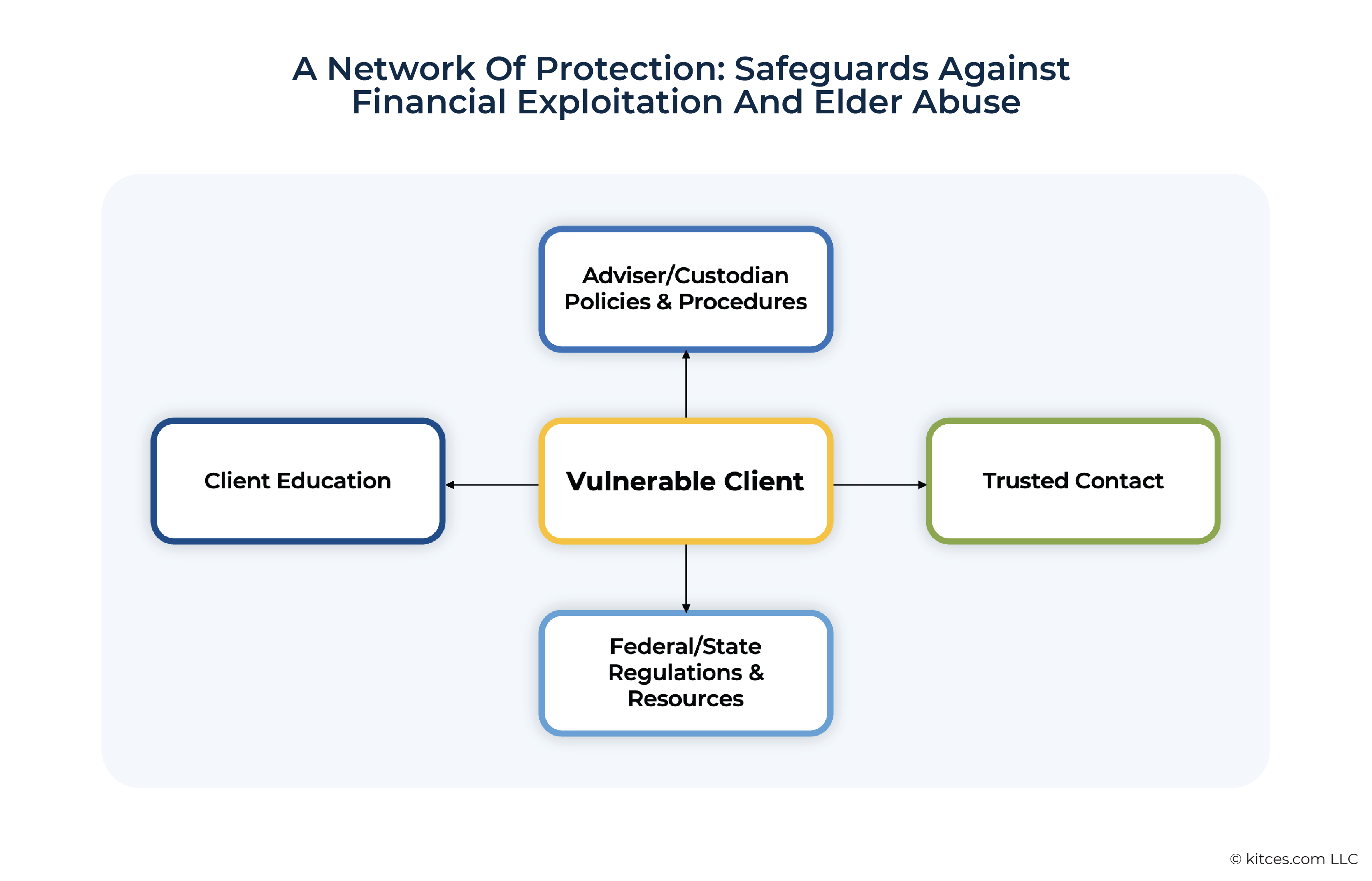
    A Network Of Protection
    Share
    Facebook Twitter LinkedIn Pinterest Email

    Financial advisors have a fiduciary duty to their clients, meaning that they must take the client’s interests into account when making recommendations and acting on their behalf. Usually, fulfilling that duty involves listening to the client to understand their wishes and acting accordingly to ensure those wishes are carried out. However, the situation becomes more complicated if the advisor suspects that the client may have a diminished capacity to make sound financial decisions on their own.

    When clients exhibit signs of cognitive decline, advisors must navigate a tricky tightrope of conflicting goals and obligations. On the one hand, an advisor’s desire to respect and uphold the client’s wishes (and their desire not to lose the client) may lead them to follow the client’s instructions at all times, even when the advisor might find them suspicious (e.g., if the client requests a large withdrawal to invest in the business of a ‘friend’ they’ve never mentioned before). But on the other hand, the advisor’s duties of care and loyalty, as well as a growing number of elder-abuse prevention laws enacted in many states, compel the advisor to intervene to prevent actions that could cause harm to the client and/or to notify authorities when they suspect the client is being exploited.

    As life expectancies increase and the population ages, cognitive decline is unfortunately on the rise.  It’s therefore a best practice for financial advisors – particularly those who serve retirees and elderly clients – to establish processes that enable them to recognize potential cognitive decline or exploitation when it occurs, and to handle those situations in a manner that meets their ethical and regulatory obligations. Having these processes in place before diminished capacity arises can ease the challenge of navigating situations where the advisor’s fiduciary duty may come in conflict with the client’s express wishes.

    The process can start with training and education, for both advisors and clients, on the signs of cognitive decline and/or financial exploitation. Ensuring that the client is aware of the risk of fraud and abuse as they age can help reassure the client that the advisor is proactively involved in protecting their interests and create awareness that the advisor will act if they suspect abuse is occurring. Advisors can also ask their clients to name a ‘trusted contact’ who can be involved if the advisor observes concerning behavior or is unable to reach the client (and having the contact authorized by the client in advance can help the advisor avoid breaching any privacy laws if they later feel the need to engage a third party in the conversation).

    When an advisor notices signs of cognitive decline or abuse, they aren’t expected to make a medical diagnosis. Instead, they can note (and document) instances where the client’s behavior or desires are inconsistent with their past behavior and emphasize their desire to protect the client’s interests. State laws often grant advisors the authority to delay requested disbursements of funds in cases of suspected fraud, providing the advisor with additional time to investigate and discuss the situation with the client. And even though the client may push back, keeping the emphasis on the actions rather than the client’s behavior – e.g., noting that the client’s actions appear unusual based on their past behavior and that firm policy requires further review in such cases to protect client assets – affirms that the advisor’s primary concern is on acting in the client’s best interest, rather than confronting the client about their cognitive ability.

    Ultimately, while it’s challenging to face clients experiencing cognitive decline – especially in deep and long-lasting client relationships – advisors have a critical role to play in ensuring that decline doesn’t lead to abuse, fraud, and/or loss of the client’s savings. By proactively putting procedures in place to prepare for, detect, and handle such situations as they arise, advisors can fulfill their legal and ethical duties – but more importantly, safeguard their clients’ assets when the client is no longer able to do so themselves.Read More…

    Addressing Clients Cognitive Decline Measures Mitigate Regulatory Responsibilities Risk
    Share. Facebook Twitter Pinterest LinkedIn Tumblr WhatsApp Email
    Previous ArticleUnwrapping Your Estate Plan for Your Kids: The Best Gift
    Next Article Stock Futures Tick Further Higher Entering Thanksgiving Holiday
    troyashbacher
    • Website

    Related Posts

    The 4% Rule and Safe Withdrawal Rates

    December 21, 2025

    SPY vs. VOO: Which S&P 500 ETF Should You Choose?

    December 20, 2025

    How TIPS Fit Into a Thoughtful Retirement Income Plan

    December 19, 2025

    Danger: Households Have More Wealth in Stocks Than Real Estate

    December 19, 2025
    Leave A Reply Cancel Reply

    Our Picks

    Goldman Sachs is pinning hopes on these consumers in 2026. Here are the stock picks.

    December 8, 2025

    Worried About an AI Bubble? Here Are BofA’s Top Stock Picks to Diversify Your Portfolio

    November 14, 2025
    • Facebook
    • Twitter
    • Pinterest
    • Instagram
    • YouTube
    • Vimeo
    Don't Miss
    Retirement Strategies

    The 4% Rule and Safe Withdrawal Rates

    By troyashbacherDecember 21, 20250

    An important rule of thumb for the physician investor to understand is the 4% rule.…

    New Hearth & Hand Spring Collection

    December 21, 2025

    What’s next for airfares after ticket prices fell in November

    December 20, 2025

    Opinion: Threatening to fire employees is no way to get them on board with AI

    December 20, 2025

    Subscribe to Updates

    Get the latest creative news from SmartMag about art & design.

    About Us

    Welcome to Retirement Financial Plan!

    At Retirement Financial Plan, our mission is simple: to help you plan, save, and secure a comfortable future. We understand that retirement is more than just a date—it’s a milestone, a lifestyle, and a new chapter in your life. Our goal is to provide practical, trustworthy guidance that empowers you to make smart financial decisions every step of the way.

    Latest Post

    The 4% Rule and Safe Withdrawal Rates

    December 21, 2025

    New Hearth & Hand Spring Collection

    December 21, 2025

    What’s next for airfares after ticket prices fell in November

    December 20, 2025
    Recent Posts
    • The 4% Rule and Safe Withdrawal Rates
    • New Hearth & Hand Spring Collection
    • What’s next for airfares after ticket prices fell in November
    • Opinion: Threatening to fire employees is no way to get them on board with AI
    • Which Balance Transfer Credit Card Is Right for Me?
    Facebook X (Twitter) Instagram Pinterest
    • About Us
    • Contact Us
    • Privacy Policy
    • Terms and Conditions
    • Disclaimer
    © 2025 retirementfinancialplan. Designed by Pro.

    Type above and press Enter to search. Press Esc to cancel.