
For those of us who lived through the 2007 to 2008 global financial crisis, the lessons are indelibly imprinted in our minds.
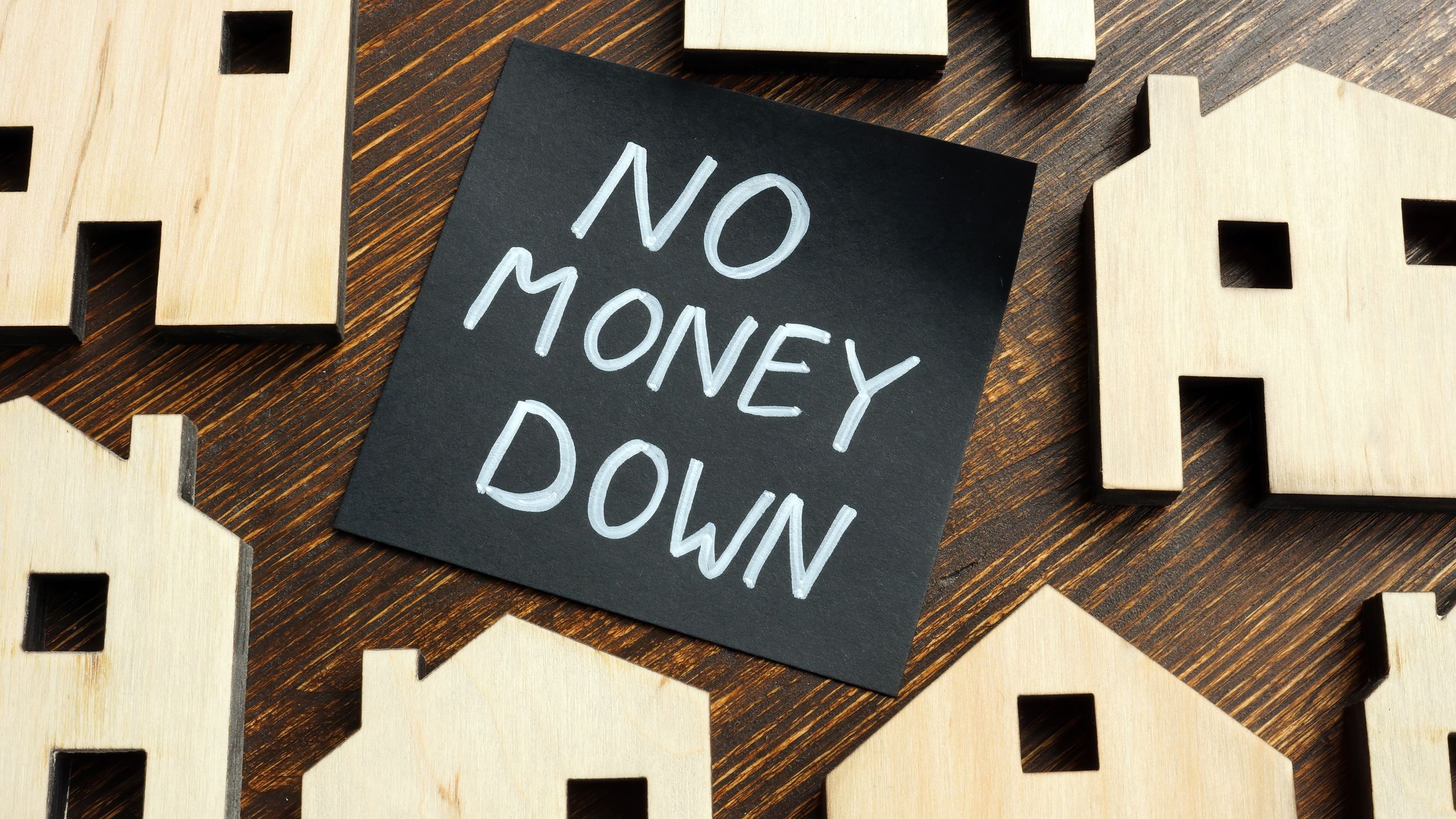
But it’s been more than a decade, and many of those who could best make use of those lessons weren’t in kindergarten yet. That’s why the resurgence of the “zero-down mortgage” is concerning.
Zero-down mortgages have existed in various forms for years, but typically, you must be part of a specific group to qualify.
From just $107.88 $24.99 for Kiplinger Personal Finance
Be a smarter, better informed investor.
CLICK FOR FREE ISSUE
Sign up for Kiplinger’s Free Newsletters
Profit and prosper with the best of expert advice on investing, taxes, retirement, personal finance and more – straight to your e-mail.
Profit and prosper with the best of expert advice – straight to your e-mail.
For example, certain military veterans have been eligible for zero-down loans for some time.
Kiplinger’s Adviser Intel, formerly known as Building Wealth, is a curated network of trusted financial professionals who share expert insights on wealth building and preservation. Contributors, including fiduciary financial planners, wealth managers, CEOs and attorneys, provide actionable advice about retirement planning, estate planning, tax strategies and more. Experts are invited to contribute and do not pay to be included, so you can trust their advice is honest and valuable.
This new mortgage differs in that borrowers don’t need to belong to any given organization to qualify — simply showing they have enough income and a high enough credit rating is sufficient.
Under this mortgage plan, a home buyer would borrow 97% of the purchase price, up to $500,000, with a conventional mortgage. They would then borrow 3% on a second mortgage, which would count as a down payment of up to $15,000.
That second mortgage doesn’t require any payments, nor does it accrue interest. However, it’s due in full immediately upon either selling, refinancing or paying off the first mortgage.
About the global financial crisis
To understand why this is concerning, a brief refresher on the causes of the financial crisis is helpful. The year 2007 started as a typical banner time for the real estate market and banks that extended mortgages to buyers.
Houses had been increasing in value for decades, which led many banks to assume that ever-rising home prices were part of a dependable rule rather than a reversible trend.
Based on that assumption, banks began issuing subprime mortgages to borrowers with almost no concern for their ability to repay the loan.
The reasoning was that, should a mortgage holder default, the bank could simply repossess the house and sell it for more than the loan amount.
This gave rise to a particularly risky and colorfully named loan scheme, the NINJA mortgage. A No Income, No Job and No Asset loan was exactly what it sounds like — a mortgage extended to people who were unemployed and broke.
Subprime, and especially NINJA mortgages, sound risky because they are.
Had the assumption of perpetually increasing home values been correct, there would have been little to no consequences for the banks. Borrowers would have lost their homes, the banks would have sold them at a profit, and 2007 to 2008 would have played out very differently.
However, home values did decline, resulting in banks holding defaulted mortgages with no way to recoup their losses. Had it not been for a $700 billion bailout package from the U.S. government, the banking system would have largely collapsed, resulting in potentially irreparable harm to the economy.
The financial crisis caused changes in the way banks issue mortgages. No longer sufficiently confident to extend loans to anyone, they began once again to require actual, verifiable evidence that a prospective borrower would be able to repay the loan — a practice that continues today.
The concern is that if the new formulation of the zero-down mortgage becomes popular, it could indicate that another lesson from the financial crisis has been forgotten: There’s no guarantee that home prices will always rise.
Homeowners assume risk
Unlike NINJA loans, the zero-down mortgage protects the banks because borrowers must have sufficient income, assets or both to indicate they’re likely to be able to make their loan payments.
There is no such protection for the borrower, which means that $15,000 “down payment” loan could cause significant problems.
Consider a scenario in which interest rates drop from their current levels, which are roughly 6.5% to 7% for a 30-year fixed-rate mortgage.
Even if they only drop to 5% — a far cry from the 2% to 3% range we enjoyed a few years ago — the temptation to refinance will be hard to resist.
At an average cost of about $2,300 to refinance a loan, dropping your interest rate by more than two percentage points could save a significant amount.
If you have a zero-down mortgage, however, that $2,300 would be added to the $15,000 payment to discharge the down payment loan, making refinancing considerably more expensive.
Should a zero-down mortgage holder need to sell their home during a housing price slump, this mortgage could cause even more significant problems.
If the home’s value has dropped such that the homeowner loses money on the sale and is unable to pay the $15,000 balloon payment, they could default on that loan, which, because it’s a second mortgage, could further jeopardize the diminished proceeds of the sale or even trigger a foreclosure.
For many prospective borrowers, the risks likely outweigh the positives.
In today’s environment of high home prices and high rent, it’s understandable that it would be difficult for many to save the traditional 20% down payment.
However, down payment reduction is possible through various programs and offers.
Looking for expert tips to grow and preserve your wealth? Sign up for Adviser Intel (formerly known as Building Wealth), our free, twice-weekly newsletter.
There are several 3% down programs: essentially the same as the zero-down program with the exception that the 3% would come from the borrower’s savings rather than a second mortgage.
For many, that would be a prudent option. Even though 3% is not a lot, it’s still enough to give borrowers a small amount of equity in the home they’re buying.
The more equity you have, the more insulated you are from housing market fluctuations and the more likely you are to be able to use that equity to refinance your mortgage should rates drop.
Who should consider a zero-down mortgage?
It might seem as if I’m completely against putting 0% down on a home. In most cases, that’s true, but under certain circumstances, the leverage afforded by low or no-interest loans can be used to make money.
If you have $15,000 saved for your down payment, it might make sense to take a zero-down mortgage and invest your savings instead. If you can get a higher return on that money rather than giving it directly to the bank, you can enhance your overall financial picture.
However, you must be disciplined if you choose to use debt in this way. Many take low-interest loans intending to invest the money, but instead, spend it on enhancing their lifestyle by taking vacations or buying nice possessions.
If a careful self-evaluation of your financial habits suggests you would do the same, it’s likely more prudent to spend your down payment savings on a down payment.
Either way, it’s important to be aware of all facets of your mortgage, especially the risk you might be assuming.
The implications of specific mortgage terms can be hard to understand. While tempting, zero-down mortgages have enough pitfalls that it’s important to enter one fully aware of the risk factors.
To be sure you choose a mortgage that will be right for you, ask your financial adviser to review options with you.
Related Content
This article was written by and presents the views of our contributing adviser, not the Kiplinger editorial staff. You can check adviser records with the SEC or with FINRA.
