
Close Menu
Retirement Financial Plan – Your Guide to a Secure Retirement

    Subscribe to Updates

    Get the latest creative news from FooBar about art, design and business.

    What's Hot

    I’m 59 With $1.7 Million Saved and Just Lost My Job. Should I Retire at 59½, or Find New Work?

    December 21, 2025

    What to Know Before Upgrading Your Samsung Galaxy Phone

    December 21, 2025

    4 Times to Say Yes to a Roth Conversion and 4 Times to Say No

    December 21, 2025
    Facebook X (Twitter) Instagram
    Trending
    • I’m 59 With $1.7 Million Saved and Just Lost My Job. Should I Retire at 59½, or Find New Work?
    • What to Know Before Upgrading Your Samsung Galaxy Phone
    • 4 Times to Say Yes to a Roth Conversion and 4 Times to Say No
    • The 4% Rule and Safe Withdrawal Rates
    • New Hearth & Hand Spring Collection
    • What’s next for airfares after ticket prices fell in November
    • Opinion: Threatening to fire employees is no way to get them on board with AI
    • Which Balance Transfer Credit Card Is Right for Me?
    Facebook X (Twitter) Instagram Vimeo
    Retirement Financial Plan – Your Guide to a Secure Retirement
    Sunday, December 21
    • Home
    • Budget & Lifestyle
    • Estate & Legacy
    • Retirement Strategies
    • Savings & Investments
    • More
      • Social Security & Medicare
      • Tax Planning
      • Tools & Reviews
    Retirement Financial Plan – Your Guide to a Secure Retirement
    • About Us
    • Contact Us
    • Privacy Policy
    • Terms and Conditions
    • Disclaimer
    Home » Confident Analysts Often Miss the Mark
    Tools & Reviews

    Confident Analysts Often Miss the Mark

    troyashbacherBy troyashbacherNovember 29, 2025No Comments4 Mins Read
    Facebook Twitter Pinterest LinkedIn Tumblr WhatsApp VKontakte Email
    Confident Analysts Often Miss the Mark
    Share
    Facebook Twitter LinkedIn Pinterest Email

    Key Takeaways

    • Wall Street analysts have missed S&P 500 index targets by significant margins almost every year over the past decade.
    • Even the Fed and top economists routinely miss their own forecasts, yet investors often place too much trust in those who sound sure of themselves, a long-known cognitive bias.
    • Overconfidence, confirmation bias, and herd behavior make both analysts and everyday investors believe they can predict what’s fundamentally unpredictable.

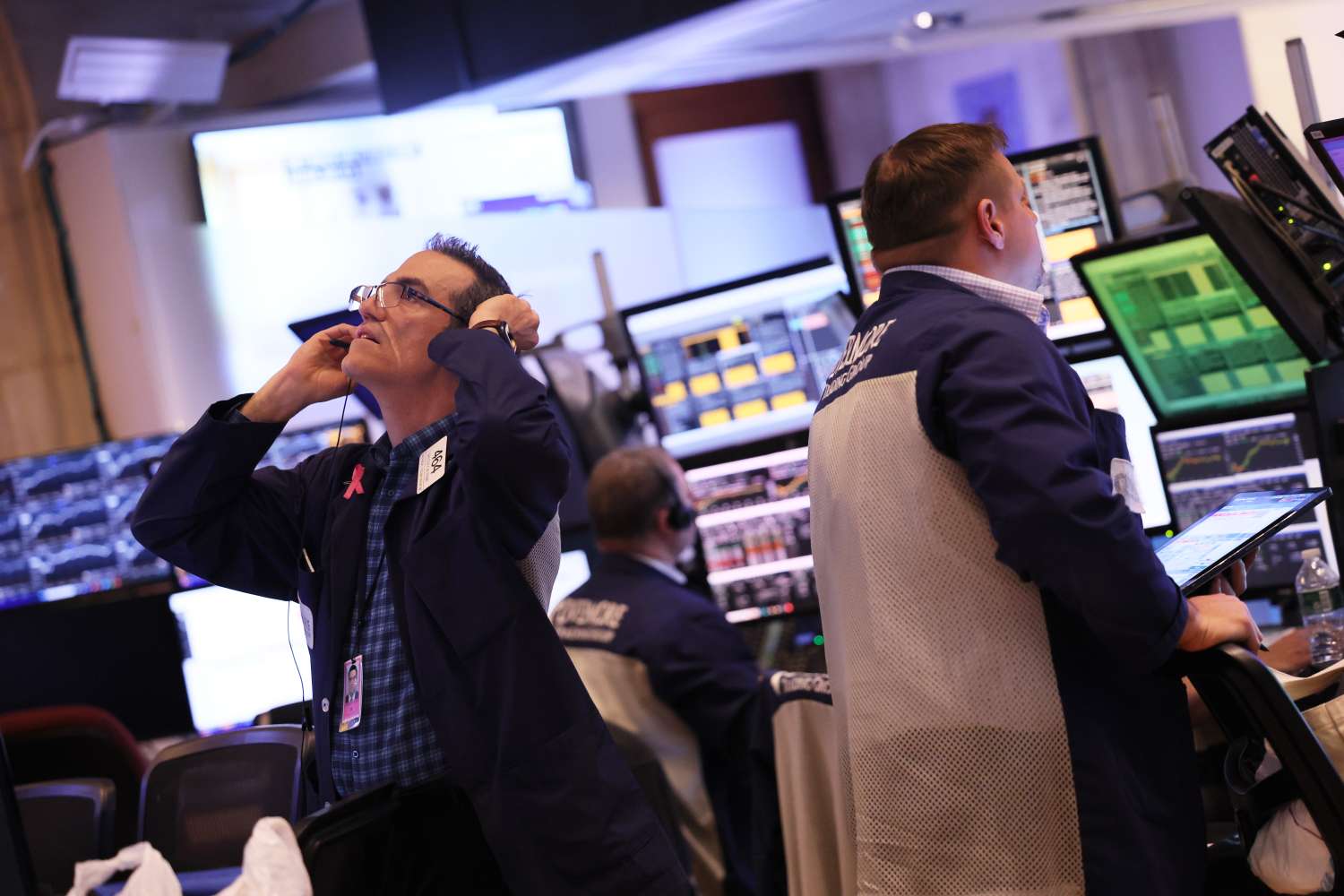
    As we head into the final month of the year, Wall Street’s top strategists are unveiling their 2026 forecasts, complete with confident predictions about where the S&P 500 index, a representative of the U.S. stock market as a whole, is expected to head.

    Before you adjust your portfolio based on what they’re saying, consider this: they’ve underestimated market returns in six of the past eight years—often by double digits.

    Yet every December, the same ritual plays out: new forecasts are delivered with the same certainty, and investors keep listening. Why do those with such expertise and mountains of data keep getting it wrong—and what should this tell you about how to invest?​

    Why Professional Forecasters Miss More Than They Hit

    Heading into 2024, the median estimate called for a 9% gain in the market. The S&P 500 actually returned 25%. The year before? Analysts predicted a 6.8% rise; the index climbed 24.2%. In 2021, Wall Street expected just 1.2% growth—and got 26.9%. With a month left in 2025, the market has already beaten expert forecasts for this year by more than 5%.

    It’s not just stock market predictions. Economic forecasters—including the ones whose models shape Wall Street’s outlooks—have a similar track record.

    A Federal Reserve review of professional economic forecasts going back to 1993 found that real gross domestic product growth fell within their predicted ranges less than half the time—worse than a coin flip. Inflation forecasts did a bit better at 56%, but that still meant they were wrong more than half of the time.​

    The Fed’s own track record isn’t much better. Between 2012 and 2020, FOMC participants kept predicting higher inflation than actually happened. Then, when inflation spiked in 2021, they underpredicted it as prices hit 40-year highs.​

    If the institutions that set monetary policy can’t reliably forecast the economy, it’s no surprise that analysts building stock predictions on top of those assumptions keep missing, too.

    The Confidence Trap: When Certainty Sells Better Than Truth

    It’s not that analysts are bad at their jobs—they’re trying to predict something that’s often fundamentally unpredictable. No model could have anticipated the 2025 tariffs-on-then-off-again turmoil or the 2020 pandemic and ensuing market crash. Markets respond to policy decisions, geopolitical shocks, and shifts in sentiment that can’t be predicted.

    The bigger question is why so many investors treat these forecasts like maps to a well-known terrain. Researchers have found that overconfidence leads investors to overtrade and overestimate their own judgment—and to place too much faith in experts who sound certain.

    Confirmation bias compounds the problem. Investors often seek out forecasts that match what they already believe, ignoring analysts who contradict their outlook. And herding behavior, which occurs when everyone follows the same consensus, makes it feel risky to do anything different.

    Tip

    Economist Scott Armstrong dubbed the propensity to have faith in those who sound confident the “seersucker theory”: we instinctively assume that people who sound certain must know what they’re talking about. Confident predictions feel reassuring, even when the track record says otherwise.

    What Works When Predictions Fail

    Confident forecasts can encourage reckless trading behavior, including chasing hot sectors, abandoning diversification, and attempting to time the market. Certainty feels reassuring, but it’s the enemy of maintaining a long-term strategy.

    So what should you do as you plan for 2026 and beyond?

    • Make sure you’re diversified: Avoiding being too heavily invested in trendy sectors is essential, as few analysts have demonstrated a long-term record of picking the sectors that will outperform. New research from Morgan Stanley has updated the classic advice that spreading investments across different asset classes improves returns, especially now that stocks and bonds don’t always move in opposite directions. Index funds give you instant diversification without betting on any single forecast.
    • Dollar-cost averaging: This means investing the same amount at regular intervals, thereby removing the guesswork entirely. More importantly, it eliminates the temptation to time the market based on Wall Street’s predictions for the coming weeks, months, or even a year at a time.

    Analysts Confident Mark
    Share. Facebook Twitter Pinterest LinkedIn Tumblr WhatsApp Email
    Previous ArticleRetiring in an RV? This Is the Best State for Smooth Roads and Scenic Drives
    Next Article Should Doctors Buy Whole Life Insurance?
    troyashbacher
    • Website

    Related Posts

    Which Balance Transfer Credit Card Is Right for Me?

    December 20, 2025

    Points Path Review: A Free Tool To Compare Costs

    December 19, 2025

    Why You Should Be Using an LLC to Protect From Liability Claims on Renovations

    December 19, 2025

    Seats.aero Award Search Tool: An Expert’s Go-To

    December 19, 2025
    Leave A Reply Cancel Reply

    Our Picks

    Goldman Sachs is pinning hopes on these consumers in 2026. Here are the stock picks.

    December 8, 2025

    Worried About an AI Bubble? Here Are BofA’s Top Stock Picks to Diversify Your Portfolio

    November 14, 2025
    • Facebook
    • Twitter
    • Pinterest
    • Instagram
    • YouTube
    • Vimeo
    Don't Miss

    I’m 59 With $1.7 Million Saved and Just Lost My Job. Should I Retire at 59½, or Find New Work?

    By troyashbacherDecember 21, 20250

    Question: I’m 59 with $1.7 million in savings and just found out my team is…

    What to Know Before Upgrading Your Samsung Galaxy Phone

    December 21, 2025

    4 Times to Say Yes to a Roth Conversion and 4 Times to Say No

    December 21, 2025

    The 4% Rule and Safe Withdrawal Rates

    December 21, 2025

    Subscribe to Updates

    Get the latest creative news from SmartMag about art & design.

    About Us

    Welcome to Retirement Financial Plan!

    At Retirement Financial Plan, our mission is simple: to help you plan, save, and secure a comfortable future. We understand that retirement is more than just a date—it’s a milestone, a lifestyle, and a new chapter in your life. Our goal is to provide practical, trustworthy guidance that empowers you to make smart financial decisions every step of the way.

    Latest Post

    I’m 59 With $1.7 Million Saved and Just Lost My Job. Should I Retire at 59½, or Find New Work?

    December 21, 2025

    What to Know Before Upgrading Your Samsung Galaxy Phone

    December 21, 2025

    4 Times to Say Yes to a Roth Conversion and 4 Times to Say No

    December 21, 2025
    Recent Posts
    • I’m 59 With $1.7 Million Saved and Just Lost My Job. Should I Retire at 59½, or Find New Work?
    • What to Know Before Upgrading Your Samsung Galaxy Phone
    • 4 Times to Say Yes to a Roth Conversion and 4 Times to Say No
    • The 4% Rule and Safe Withdrawal Rates
    • New Hearth & Hand Spring Collection
    Facebook X (Twitter) Instagram Pinterest
    • About Us
    • Contact Us
    • Privacy Policy
    • Terms and Conditions
    • Disclaimer
    © 2025 retirementfinancialplan. Designed by Pro.

    Type above and press Enter to search. Press Esc to cancel.