
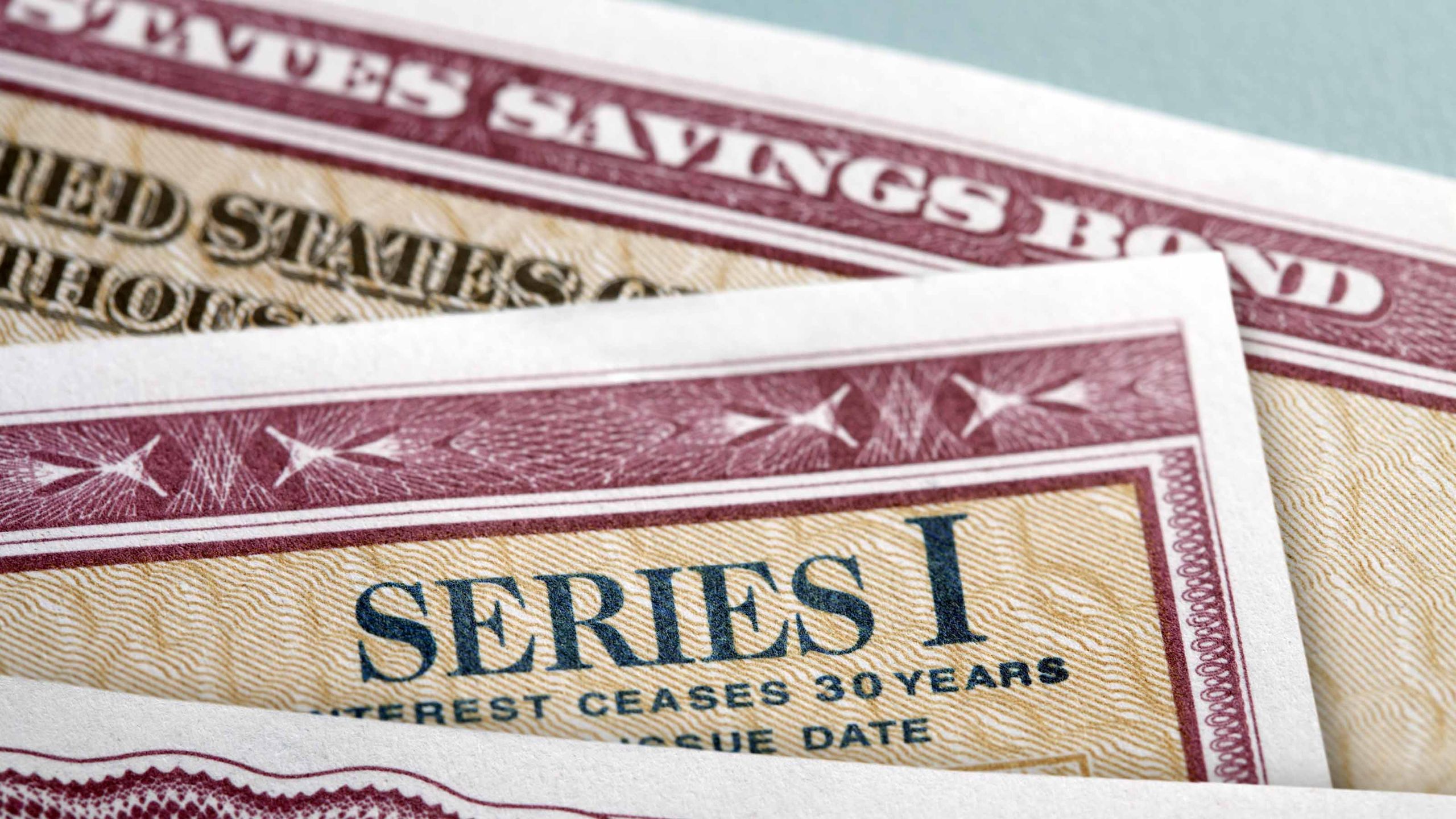
Some investors have owned Series I savings bonds (I bonds) for many years, and the 30-year maturity date might be approaching. Others bought Series I savings bonds in recent years to insulate their portfolios from inflation and the ups and downs in the stock market.
Whether you are a recent investor in I bonds, have owned them for many years, or are pondering adding them to your investment portfolio, you should be aware of the federal income tax rules.
I bonds have important tax advantages for owners. Interest earned on I bonds is exempt from state and local taxation. Also, owners can defer federal income tax on the accrued interest for up to 30 years.
From just $107.88 $24.99 for Kiplinger Personal Finance
Be a smarter, better informed investor.
CLICK FOR FREE ISSUE
Sign up for Kiplinger’s Free Newsletters
Profit and prosper with the best of expert advice on investing, taxes, retirement, personal finance and more – straight to your e-mail.
Profit and prosper with the best of expert advice – straight to your e-mail.
These rules might seem simple at first. But they’re not as straightforward as you think, and they can get complicated pretty quickly.
For example, the tax treatment of I bonds varies depending on who owns the bonds, whether you gift the bonds to someone else, and, in some cases, how the bonds are used. Following are descriptions of how and when I bond interest is taxed under federal law in eight common situations.
Note: For people who own EE bonds, the federal income tax consequences are identical to those of I bonds. So this story is also applicable to you.
1. Taxes when you are the bond owner
I bond buyers have a choice when they acquire the bonds. They can pay federal income tax each year on the interest earned or defer the tax bill to the end. Most people choose the latter. They report the interest income on their Form 1040 for the year the bonds mature (generally, 30 years) or when they’re cashed in, whichever comes first.
However, deferring tax on the full amount of accrued interest for up to 30 years may sound like a great idea until you get the tax bill for three decades’ worth of interest.
Also, taking the tax hit all at once can push you into a higher federal income tax bracket, making the tax bill even more expensive than it needed to be.
2. How to report and pay taxes when you cash in I Bonds or they mature
If you cashed in I bonds this year, you must report the interest on line 2b of your 2025 Form 1040 and pay tax to the extent you didn’t otherwise include the interest income in a prior year. If you received $1,500 or more in interest during the year, you would also have to fill out Schedule B and attach it to your tax return.
If you keep the I bonds through the date they mature, generally 30 years, and you didn’t otherwise include the interest income in a prior year, you will be taxed on all the accrued but previously untaxed interest in the year of maturity, whether or not you cash them in. You would report interest income on your Form 1040 in the same manner as if you cashed in the I bonds.
If you are using the bond proceeds to pay for higher education, some of the interest may be exempt (see “Using I Bonds for Education” below).
3. Tax implications of co-owned I Bonds
For I bonds issued in the name of co-owners, such as a parent and child or grandparent and grandchild, the interest is generally taxable to the co-owner whose funds were used to buy the bonds.
However, that co-owner can choose to defer paying tax on the interest or report it annually. This is true even if the other co-owner redeems the bonds and keeps all the proceeds.
4. Gifting I Bonds: Tax rules when buying bonds for others
Savings bonds make great gifts. But if you buy I bonds for someone else, such as your children, grandchildren or any other person, the interest is reportable by that person, provided the bonds are titled in his or her name. Just like any other holder of I bonds, the recipient can choose to defer paying tax on the interest until the earlier of the year the bonds mature or are cashed in, or he or she can report the interest annually.
5. Gifting I Bonds you own
Gifting an I bond before maturity will accelerate taxation of the interest income. Giving away bonds you already own to someone else doesn’t get you off the hook with the federal government for owing money on previously untaxed interest. If the bonds are reissued in the gift recipient’s name, you’re still taxed on all that interest in the year of the gift.
6. Donating I Bonds to charity
Donating an I bond before it matures to charity while you’re alive will also accelerate taxation of the interest income. As with gifts to other people, giving away bonds you already own to your alma mater, favorite museum or other charitable organization doesn’t let you avoid the tax on previously untaxed interest. You’re still taxed on all that interest in the year the donation is made.
7. Inheriting I Bonds
If you inherit I bonds that haven’t yet matured, who is taxed on the accrued interest that went untaxed because the original owner deferred the interest? It depends. The executor of the decedent’s estate can choose to include all pre-death interest earned on the bonds on the decedent’s final income tax return. If this is done, the beneficiary reports only post-death interest on Form 1040 for the year the bonds mature or are redeemed, whichever comes first.
If the executor doesn’t include the interest income on the deceased owner’s final federal income tax return, the beneficiary will owe taxes on all pre-death and post-death interest once the bond matures or is redeemed, again whichever is earlier.
8. Using I Bonds for education
One way to avoid paying federal income tax on accrued I bond interest is to cash in the bonds before or on the maturity date and use the proceeds to help pay for college or other higher education expenses for you, your spouse or your dependent. But there are lots of rules and hurdles to jump over to be able to take advantage of this tax perk. For instance:
- You must have purchased the bonds after 1989 when you were at least 24 years old.
- The bonds must be in your name only.
- The bonds must be redeemed to pay for undergraduate, graduate or vocational school tuition and fees for you, your spouse, or your dependent. (Grandparents can’t use this tax break to help pay for their grandchild’s college tuition unless the grandparent can, on their 1040, claim the grandkid as a dependent.)
- Room and board costs aren’t eligible for the exclusion.
- The exclusion is subject to strict income limits. For 2025, it begins to phase out at modified adjusted gross income (modified AGI) of more than $149,250 for joint filers and $99,500 for other filers, and is fully phased out at modified AGI of $179,250 for joint filers and $114,500 for other filers. For 2026, it begins to phase out at modified AGI of more than $152,650 for joint filers and $101,800 for others and is completely phased out at modified AGI of $182,650 for joint filers and $116,800 for other filers.
If the proceeds from all savings bonds cashed in during the year exceed the qualified education expenses paid that year, the amount of interest you can exclude is reduced proportionally.
Use IRS Schedule B and Form 8815 to report and calculate any excluded I bond interest used for education.
