
(Image credit: Getty Images)
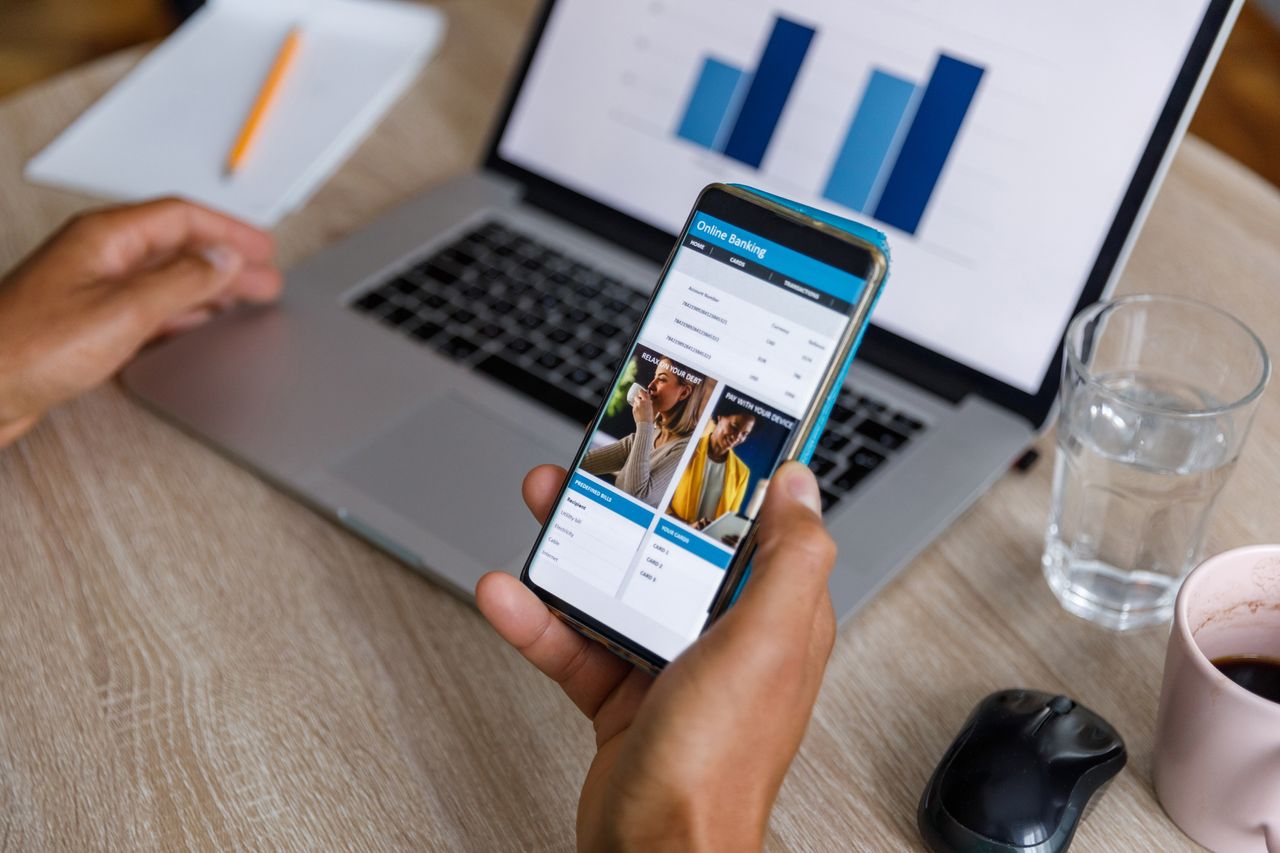
If you’re looking for the best interest rate on a savings account, chances are you’ll find it at an online bank. Online banks, which are banks that operate without physical branches, offer convenient digital banking and competitive interest rates that can maximize your return on your savings.
The national average interest rate for savings accounts as of December 15 was 0.39%, according to the Federal Deposit Insurance Corporation (FDIC).
But right now, some online banks are offering savings account interest rates up to 5%. Since online banks have lower overhead costs, they’re able to pass on better interest rates to customers than you’ll typically find offered by traditional banks.
From just $107.88 $24.99 for Kiplinger Personal Finance
Become a smarter, better informed investor. Subscribe from just $107.88 $24.99, plus get up to 4 Special Issues
CLICK FOR FREE ISSUE
Sign up for Kiplinger’s Free Newsletters
Profit and prosper with the best of expert advice on investing, taxes, retirement, personal finance and more – straight to your e-mail.
Profit and prosper with the best of expert advice – straight to your e-mail.
How interest rates are changing and why it matters
Interest rates on savings accounts have eased modestly over the past year as the broader rate environment has shifted. The national average savings account rate stood at 0.47% in mid-January 2024 before gradually slipping to 0.39% by December, according to FDIC data. Rates have continued to edge slightly lower throughout 2025 as the Federal Reserve begins to dial back policy rates.
Even with that pullback, online banks continue to pay far more than the national average, keeping their savings yields well above what most traditional banks offer.
The Federal Reserve sets its benchmark interest rate during policy meetings, and those decisions ripple through the financial system, influencing everything from mortgage rates to the interest banks pay on savings accounts.
In 2025, Fed policymakers have been walking a careful line, balancing signs of a softening labor market with ongoing uncertainty tied to tariffs and broader economic conditions. At its December meeting, the Fed cut its policy rate by 0.25% and some economists expect at least two additional rate cuts in the year ahead.
Against that backdrop, the yield advantage at online banks stands out. Even as rates trend lower, their higher payouts can make a meaningful difference for savers willing to trade branches for better returns.
Pros of banking online
For savers weighing whether to make the switch, the benefits of online banking extend beyond higher interest rates. Here are a few pros to consider:
- Higher interest rates and potentially lower fees. Since online banks don’t have the overhead of maintaining physical branches, they tend to offer higher interest rates on savings accounts. You may also find that online banks have lower fees than traditional banks.
- Often no minimums. Traditional banks often require you to maintain a minimum balance in your checking or savings account. If your balance drops below the minimum, you’ll be required to pay a monthly fee. Some online banks will waive that minimum balance for a fee-free approach.
- Modern mobile features. Online banks often offer modern mobile features, including AI budgeting tools, face and fingerprint ID app capabilities, the ability to freeze and unfreeze your digital card, real-time spending alerts and more.
- Quick account opening/management and low cost. Opening an account with an online bank is typically a quick and easy process. The set up process is typically quick, and you’ll often get instant access to your account. Costs tend to be minimal, making digital banking an appealing option.
Cons and things to consider
While there are many benefits to online banking, you should also be aware of the drawbacks:
- No branches / limited in-person service. Since online banks lack physical branches, you can’t get in-person customer service. These banks may offer customer service via phone, online chat or social media, but the customer service methods and availability can vary from bank to bank. If you want the reassurance of being able to go to speak with a person directly, digital banking may not be the best choice for you.
- Cash deposit hassles. Depositing cash in an online bank can be a hassle. Some banks partner with retailers like Walmart, CVS or Dollar General, and you’ll need to go to one of those retailers to make your deposit. You may also be able to use an ATM to make a cash deposit.
- Varying rates. While digital banking frequently offers higher interest rates, those rates can still fall quickly, decreasing the value you’re getting from digital banking. Some online banks may offer higher promotional rates that will decrease over time. Be sure to read the bank’s policies to fully understand how interest rates may change.
Real-world examples
With the national average savings rate sitting at 0.39%, the gap between traditional banks and online options remains wide. Here’s how a few online banks currently stack up.
- Varo offers a high-yield savings account with 5.00% APY on up to $5,000, and 2.5% APY on the rest of your balance.
- AdelFi’s personal savings account offers new members 5% APY on up to $5,000, and 2.25% APY on balances from $5,000 to $10,000.
- SoFi’s high-yield savings account features a six-month introductory 4.30% APY, and a standard 3.60% APY.
- Axos offers an Axos ONE savings and checking bundle. Customers can get up to 4.31% APY on savings and 0.51% APY on checking.
Use the tool below to quickly explore and compare more of today’s top savings account offers:
When switching makes sense and when it doesn’t
You may decide it makes sense to switch to digital banking if you have substantial savings and want to maximize the interest your money earns. By switching to a high-yield savings account through an online bank, you may qualify for a substantially higher interest rate than your current APY.
But be careful about aggressively chasing rates, especially if online banks are offering promotional rates. If you’re looking for a long-term banking solution, it’s important to make sure that the services available and the overall convenience the bank offers truly match your needs. Consider the types of accounts you need and your banking priorities when deciding if an online bank is right for you.
It’s common to be worried about the safety of online banking, especially since you won’t initially go to a physical branch to open your account and make your first deposit. Be sure to choose a bank that is FDIC insured. FDIC insurance applies whether the bank is online or brick-and-mortar, and in case of a bank failure, FDIC insurance protects your money up to at least $250,000.
How to decide if an online bank is right for you
Digital banking offers many perks, including higher interest rates than traditional savings accounts provide. But those perks come with trade-offs, including the lack of in-person customer service, cash deposits that can be a hassle and potentially varying rates.
If you’re considering switching to online banking, take some time to research each bank and its available products. Compare the current rates and check the fee schedule to make sure you understand the potential costs involved and any minimum balance requirements.
You can also take advantage of digital banking interest rates with a hybrid approach. Consider opening a savings account with a digital bank, but leaving your other accounts in your current bank open, too. You can try this hybrid approach to see how well digital banking works for you.
