

Electricity prices have been on a roller coaster in the last few years, and at the moment they’re climbing — just in time for the start of winter.
Nationally, residential electricity prices rose 10.5% between January and August of this year, according to the National Energy Assistance Directors Association (NEADA). That’s more than three times the annual rate of overall inflation.
But the national average hides a lot of regional variation. While three states actually saw electricity prices drop in that nine-month period, nine states saw an increase of more than 20% — topped by Missouri at 37.4% and North Dakota at 30.3%. Another 19 states saw increases between 10% and 20%.
The chance that prices are going to level out soon is slim, even as energy affordability becomes a hot-button political issue.
U.S. electricity providers are for-profit companies that are tightly regulated by state public utility commissions. In the first nine months of this year, utilities proposed and received authorization for $34 billion in rate increases — more than double the $16 billion during the same period last year, according to Powerlines, a nonprofit that focuses on regulatory and other issues affecting the U.S. power grid.
What’s causing the rise in electricity prices?
In an interview with NerdWallet, Charles Hua, founder and executive director of Powerlines, listed some of the primary causes of electricity inflation.
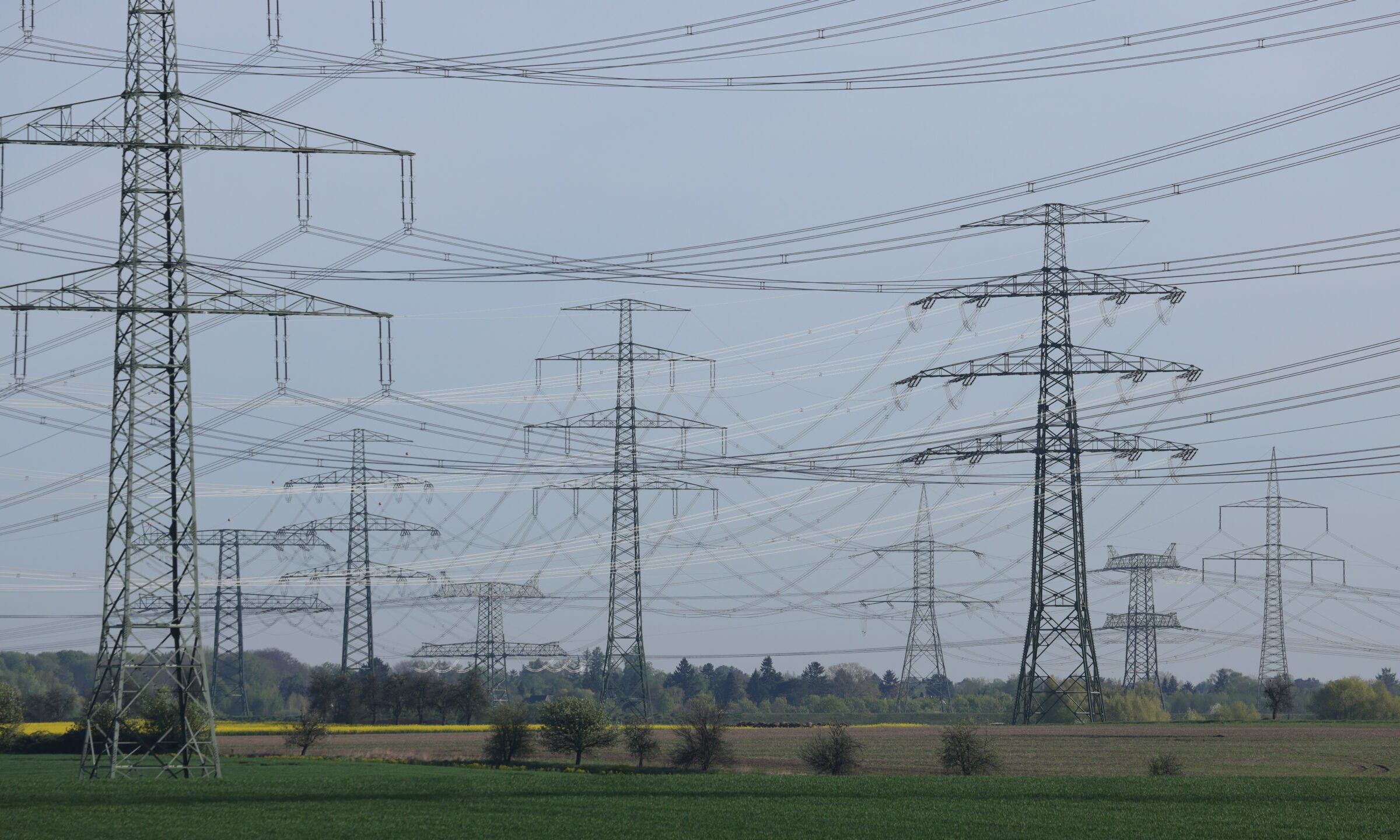
“Our poles and wires are aging. It costs a lot of money to just replace that infrastructure,” Hua says. “And some of that is just because the poles and wires in your backyard are just reaching the end of their useful life.”
At the same time, energy demand is rising thanks to the AI boom and other factors. Hua notes that there are proven ways to make our current energy grid more efficient without going on a building spree — but that’s not how utilities are incentivized.
“The thing to know about utilities is that they earn a profit only on capital expenditures and not on operational expenditures,” Hua says. “So they have a structural incentive to build a bunch of new power plants and to build a bunch of new infrastructure.”
2. More extreme weather events
“The second big factor is extreme weather events — storms, wildfires, winter cold stretches, hurricanes — that have battered our energy and grid infrastructure in many ways,” Hua says.
And it’s not just a like-for-like replacement of damaged infrastructure, he adds, but upgrading it to make it more resilient as such events grow more common. Extreme weather events have also driven up insurance and other costs for utility companies.
Natural gas is the biggest single source of electricity in the U.S., accounting for about 43% of power generated in 2023. Gas prices skyrocketed after Russia invaded Ukraine, and while they fell back after that spike, they have been rising again in recent months. Hua notes that in many states, utilities can pass those increases directly onto consumers.
What does it mean for consumers?
Electricity costs are a relatively small portion of average household income — around 2% — although that percentage has been growing since 2019.
What that means in dollar terms: From 2021 to 2025, the average monthly residential electric bill rose from $121 to an estimated $156, according to the NEADA. That’s enough to throw households that are already struggling financially into further turmoil.
The Washington Post did an analysis of 2025 power disconnections in 11 states, and found a year-over-year increase in eight of them. In Pennsylvania alone, power shutoffs have risen 21% this year, with 270,000 homes losing power.
Even for consumers who can absorb the increases, sticker shock on monthly power bills is turning energy affordability into a political issue — much the way egg prices were in the 2024 presidential election.
For example, both candidates in November’s gubernatorial election in New Jersey made energy affordability a central issue in their campaigns, with Democrat Mikie Sherrill declaring “a state of emergency on energy costs” in her winning campaign.
Hua thinks that issue will grow in visibility as winter sets in, especially as an increasing percentage of Americans heat their homes with electricity, according to the U.S. Energy Information Administration.
“I do think that in the next three months this will be just a big issue, because it’s not only substantively a big issue, but now politically it’s an issue, and so the marriage of the two will create a really unpredictable storm around utility bill costs and affordability,” Hua says.
Getting more out of the grid we have
Hua declares himself “optimistic” that increased attention on energy affordability will help push regulators to get more out of the infrastructure that’s already in place.
The grid we have is only about 40% to 50% efficient, Hua says. There are available “grid-enhancing” technologies, including increased battery storage — that Hua describes collectively as “ibuprofen for the grid” — that would boost that to 60% to 70% at a much lower cost than building equivalent new capacity.
Such measures would “make the grid more efficient and can lower prices and provide some immediate relief to the system,” Hua says. “It’s not going to solve every single challenge on the grid, but it’s going to provide some relief.”
What can you do about electricity costs?
For those struggling financially, there are programs to help low-income consumers pay their utility bills. The national program, the Low Income Home Energy Assistance Program (LIHEAP), has been under political pressure, but long-delayed federal funds were recently released. Search Google for “energy assistance” in your state.This is an excerpt from NerdWallet’s free weekly email newsletter, MoneyNerd. Click to subscribe.
(Photo by Sean Gallup/Getty Images)
